Windows Linux Tips: FTP access restrictions


twitter tips,twitter tricks,twitter tips and tricks,twitter latest updates,facebook tips and tricks,facebook tricks,facebook tips,Windows 7 Tips,Windows 7 tips and tricks,Windows 7 tips with staps,Windows XP Tips,Windows XP tips and tricks,Windows XP tips with staps,Windows Linux Tips,Windows Linux Tips and tricks

When you first install Linux, it comes with a lot of Internet services running, including mail, telnet, finger
and FTP. You really should disable all those that you don't need from /etc/inetd.conf and your startup scripts.

FTP may be very useful, but must be configured correctly. It can allow people to log into their accounts, it
can allow anonymous users to login to a public software directory, and it can display nice messages to them.

The files that you will probably want to modify are /etc/ftpusers and /etc/ftpaccess.The file /etc/ftpusers is very simple. It lists the people that will not be allowed to use FTP to your system. Theroot account, and other system accounts should be in that file.

The file /etc/ftpaccess is a bit more complex and controls the behaviour of the FTP server. It tells it what to
use as README file to display on a directory listing, what kind of logs to create and what messages to
display.

Note that if you create an anonymous FTP area, you will need to read the FTP man page and do exactly what
it tells you to avoid possible security risks.


"Windows Linux Tips: FTP access restrictions"


Reference : techpraveen.com

Windows Linux Tips: Background image in X Window

twitter tips,twitter tricks,twitter tips and tricks,twitter latest updates,facebook tips and tricks,facebook tricks,facebook tips,Windows 7 Tips,Windows 7 tips and tricks,Windows 7 tips with staps,Windows XP Tips,Windows XP tips and tricks,Windows XP tips with staps,Windows Linux Tips,Windows Linux Tips and tricks


By default, the background in X Window is a grey background. Some window managers have their own
options to set other backgrounds, and some don't.

A program you can use to set your background is a program that comes with most Linux distributions. It's
called XV, and you can specify which background image you want with this line:xv -quit -root image.gif

This will set the background to be the image.gif file. You can add that line in your .xinitrc file, in your home
directory, so it is executed each time you launch X Window.


"Windows Linux Tips: Background image in X Window"


Reference : techpraveen.com

Windows Linux Tips: Customize Netscape Communicator


twitter tips,twitter tricks,twitter tips and tricks,twitter latest updates,facebook tips and tricks,facebook tricks,facebook tips,Windows 7 Tips,Windows 7 tips and tricks,Windows 7 tips with staps,Windows XP Tips,Windows XP tips and tricks,Windows XP tips with staps,Windows Linux Tips,Windows Linux Tips and tricks

Netscape Communicator has one nice feature that few people use.When you download it, it has a Personal
Toolbar with buttons that most of us may not find really useful, so we either turn it off or don't look at it.

I found it to be a much more useful tool than the Bookmarks.What appears on that bar is simply what's
inside the Personal Folder inside your Bookmarks.

You can ceate folders in it for news sites, Linux sites, etc and move your bookmarks into them (with the Edit
Bookmarks option).You then have your own personal portal in your browser:


"Windows Linux Tips: Customize Netscape Communicator"


Reference : techpraveen.com


Windows Linux Tips: POP3 in Pine


twitter tips,twitter tricks,twitter tips and tricks,twitter latest updates,facebook tips and tricks,facebook tricks,facebook tips,Windows 7 Tips,Windows 7 tips and tricks,Windows 7 tips with staps,Windows XP Tips,Windows XP tips and tricks,Windows XP tips with staps,Windows Linux Tips,Windows Linux Tips and tricks

Many Linux users use Pine as their mail client. Lets see how you can use Pine both with local mail and with
POP3 mail, without using fetchmail or some other tool to get POP mail first.

First you will want to use multiple config files:
pine -p localmail
pine -p popserver1
pine -p popserver2

You need to configure Pine to use your POP3 server. In the program go to Setup, Config. You'll want to set
something like this in your inbox-path: {pop.server.com/pop3/user=myid}INBOX

Now restart Pine and it will ask you for your password and connect to the remote server, and use it just like if
you were accessing local mail.


"Windows Linux Tips: POP3 in Pine"


Reference : techpraveen.com

Windows Linux Tips: Multiple accounts in Pine


twitter tips,twitter tricks,twitter tips and tricks,twitter latest updates,facebook tips and tricks,facebook tricks,facebook tips,Windows 7 Tips,Windows 7 tips and tricks,Windows 7 tips with staps,Windows XP Tips,Windows XP tips and tricks,Windows XP tips with staps,Windows Linux Tips,Windows Linux Tips and tricks

You can use multiple POP3, IMAP or other incoming mail accounts in the same config file by editing the line
"incoming-folders=" from .pinerc in your local home directory.

The syntax is: incoming-folders= "Nick1" {pop1.domain.com/pop3/user=login}INBOX, "Nick2" {pop2.somewhere.com/pop3/user=login}INBOX

This will create a new collection in Pine with these folders in it, plus the mail folder on the local system.


" Windows Linux Tips: Multiple accounts in Pine"


Reference : techpraveen.com

Windows Linux Tips: Running Java programs


twitter tips,twitter tricks,twitter tips and tricks,twitter latest updates,facebook tips and tricks,facebook tricks,facebook tips,Windows 7 Tips,Windows 7 tips and tricks,Windows 7 tips with staps,Windows XP Tips,Windows XP tips and tricks,Windows XP tips with staps,Windows Linux Tips,Windows Linux Tips and tricks

Java is an interpreted language. Usualy Java is found on the Web, in small programs called applets. But many
Java applications exist. They are like applets, but require a Java Virtual Machine to run on your system.

Netscape Communicator and any Java-enabled browser can run Java applets, but what if you want to run Java
programs?Java programs are files ending with .class and must be run in a JVM. 

The Java Development Kit comes witha JVM. What you need is the Linux port of the JDK that you can find at 
http://www.blackdown.org. Once installed, you can run any Java application using the line:
java Program Where java is the JVM, from the JDK package, and Program is the class found inside the Program.class file.

Note that you do not have to specify the .class part of the file to run it.


"Windows Linux Tips: Running Java programs"


Reference : techpraveen.com

Windows Linux Tips: Virtual hosts in Apache


twitter tips,twitter tricks,twitter tips and tricks,twitter latest updates,facebook tips and tricks,facebook tricks,facebook tips,Windows 7 Tips,Windows 7 tips and tricks,Windows 7 tips with staps,Windows XP Tips,Windows XP tips and tricks,Windows XP tips with staps,Windows Linux Tips,Windows Linux Tips and tricks

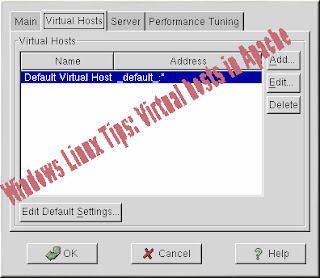
Apache, the popular Web server for Linux and Unix, allows you to host virtual hostnames with multiple IP
addresses. You can set one IP to each hostname. But what if you want to host multiple hostnames on a singleIP? Apache allows you to do it.

The trick is a single command that goes in the httpd.conf configuration file:

NameVirtualHost 1.2.3.4

Replacing 1.2.3.4 with your real IP address, this will allow Apache to know on which IP it should serve the
virtual hostnames. Then you can add the virtual commands for every 

hostname you want to host:
<VirtualHost virtual.host.com>ServerAdmin webmaster@virtual.host.com

DocumentRoot /home/httpd/virtual ServerName virtual.host.com</VirtualHost>

This will add virtual.host.com in your list of virtual hosts and serve 
the pages in /home/httpd/virtual.Ofcourse you need to have the actual virtual.host.com hostname pointing 
to that system.


"Windows Linux Tips: Virtual hosts in Apache"


Reference : techpraveen.com

Windows Linux Tips: Making CD-ROM images


twitter tips,twitter tricks,twitter tips and tricks,twitter latest updates,facebook tips and tricks,facebook tricks,facebook tips,Windows 7 Tips,Windows 7 tips and tricks,Windows 7 tips with staps,Windows XP Tips,Windows XP tips and tricks,Windows XP tips with staps

With other operating systems, such as Microsoft Windows or IBM OS/2, you are not allowed in the license to make your own CD-ROM with the OS on it and then distribute it.

Linux, being Open Source and free, can be copied. You can download a distribution or buy it from an online store and burn your own copy, and then install it on many computers,or give it to your friends. Usually, you will find instructions on how to do that on the FTP server for your favorite distribution. 

You will need the main directory on the CD-ROM. The sources are not needed since they are available from the FTP site.Some distributions also come with ISO images of their CD-ROM.This is a single file that can be put onto a CD-ROM, and will create a full file system with files on it.

One thing you have to be careful is not to copy commercial programs. The basic CD-ROM where the Linux distribution is located is composed of free software. But some distributions may come with other commercial
programs, and you should read the license first.


"Windows Linux Tips: Making CD-ROM images"


Reference: tipoftheweek.darkelf.net

Windows Linux Tips: LILO and boot problems


twitter tips,twitter tricks,twitter tips and tricks,twitter latest updates,facebook tips and tricks,facebook tricks,facebook tips,Windows 7 Tips,Windows 7 tips and tricks,Windows 7 tips with staps,Windows XP Tips,Windows XP tips and tricks,Windows XP tips with staps

When a computer starts, the number of beeps the BIOS outputs tells you the state of the computer. On some computers, one beep means all is ok, but 2 beeps mean there is an error.LILO uses the same kind of codes.The number of letters you see from the word LILO on the screen says what is wrong.

The whole word means everything is fine, only LI means only the first part of LILO could be loaded. A full description of this is available from the Boot disk HOWTO.

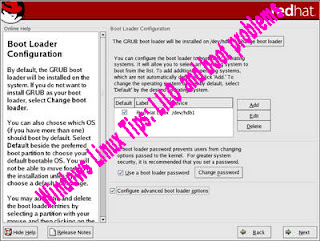
When LILO can't load, it's a major problem. This often means that the boot code was corrupted. The only way to boot is from a floppy disk. In RedHat, you can use the rescue disk, in Slackware, you can use the boot disk with the "mount" image.

When LILO is fine, it's often easier to figure a boot problem. If the kernel panics when it tries to boot,it isusualy due to a configuration error. You can tell LILO to mount another kernel you may have, like a "safe" or"old" image you kept for these cases.

 If the problem is in initialization scripts, you can tell LILO to boot directly into a shell with the following boot command line: LILO boot: linux init=/bin/sh Where "linux" would be your kernel image.


"Windows Linux Tips: LILO and boot problems"


Reference: tipoftheweek.darkelf.net

Windows Linux Tips: Bytes per inodes


twitter tips,twitter tricks,twitter tips and tricks,twitter latest updates,facebook tips and tricks,facebook tricks,facebook tips,Windows 7 Tips,Windows 7 tips and tricks,Windows 7 tips with staps,Windows XP Tips,Windows XP tips and tricks,Windows XP tips with staps

When you format a partition using Linux's primary file system, ext2, you have the choice of how many bytes
per inode you want. From the man page:-i bytes-per-inode

Specify  the  bytes/inode ratio.  mke2fs creates a  inode for every bytes-per-inode bytes of  space  on
the  disk.   This  value  defaults  to  4096 bytes.bytes-per-inode must be at least 1024.

This means that by using a smaller size, you will save disk space but may slow down the system. It is a space/speed trade off.This is similar to one of FAT16/FAT32' major differences.


"Windows Linux Tips: Bytes per inodes"


Reference: tipoftheweek.darkelf.net

Windows Linux Tips: More information from usenet


twitter tips,twitter tricks,twitter tips and tricks,twitter latest updates,facebook tips and tricks,facebook tricks,facebook tips,Windows 7 Tips,Windows 7 tips and tricks,Windows 7 tips with staps,Windows XP Tips,Windows XP tips and tricks,Windows XP tips with staps

There are newsgroups about everything. Newsgroups on the latest TV show, on gardening, and more. There
also are newsgroups on Linux. In fact, the best help can be obtained from newsgroups. But which ones?
Here is a list of a few newsgroups dedicated to Linux, and what they are used for:

•  comp.os.linux.advocacy: This newsgroup is used for advocacy. People stating their opinionsabout Linux or Linux applications, and about Linux competitors. Some post facts, some willflame other people.

•  comp.os.linux.setup: This is a general purpose setup help group. Users will post questions and
get answers there.

•  linux.*: There now is a linux section on usenet. Currently there are more than 150 groups in
linux.* and they are all about Linux!Make sure you read the FAQ and rules of every newsgroup you want to post to.


"Windows Linux Tips: More information from usenet"


Reference: tipoftheweek.darkelf.net

Windows Linux Tips: Default boot mode


twitter tips,twitter tricks,twitter tips and tricks,twitter latest updates,facebook tips and tricks,facebook tricks,facebook tips,Windows 7 Tips,Windows 7 tips and tricks,Windows 7 tips with staps,Windows XP Tips,Windows XP tips and tricks,Windows XP tips with staps


When a Linux system boots, it loads the kernel, all its drivers, and the networking servers, then the system
will display a text login prompt. There, users can enter their user names and their passwords. But it doesn't
have to boot this way.

There are 3 modes defined in most Linux distributions that can be used for booting. They are defined in
/etc/inittab and have specific numbers. The first mode, also called runlevel 1, is single user mode. That mode
will only boot the system for 1 user, with no networking. Runlevel 3 is the default mode.

 It will load the networking servers and display a text login prompt. Runlevel 5 is the graphical mode. If you have X Window installed and configured, you can use it to display a graphical login prompt.The way to change this is to edit /etc/inittab and change the initdefault line:id:3:initdefault: Changing a 3 to a 5 will make the system display a xdm graphical screen on bootup.


"Windows Linux Tips: Default boot mode"


Reference: tipoftheweek.darkelf.net

Windows Linux Tips: Default file permissions


twitter tips,twitter tricks,twitter tips and tricks,twitter latest updates,facebook tips and tricks,facebook tricks,facebook tips,Windows 7 Tips,Windows 7 tips and tricks,Windows 7 tips with staps,Windows XP Tips,Windows XP tips and tricks,Windows XP tips with staps


When you create a file, the system gives it default permissions. On most systems the permissions are 755 (read, write and execute for the owner, and read and execute for others).


This default is setup with the umask command. To use the command, you need to find the right octal number
to give it. The permissions in the umask are turned off from 666. This means that a umask of 022 will give
you the default of 755. To change your default permissions from 755 to 700, you would use this command: umask 077.


"Windows Linux Tips: Default file permissions"


Reference: tipoftheweek.darkelf.net

Windows Linux Tips: Multiple kernels choices


twitter tips,twitter tricks,twitter tips and tricks,twitter latest updates,facebook tips and tricks,facebook tricks,facebook tips,Windows 7 Tips,Windows 7 tips and tricks,Windows 7 tips with staps,Windows XP Tips,Windows XP tips and tricks,Windows XP tips with staps


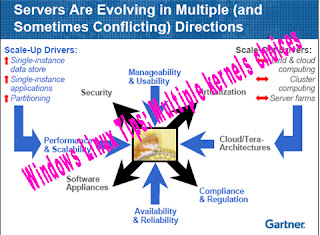
When you compile a new kernel, you will often change your configuration. This means you may forget to
include an important driver, like the IDE driver, or otherwise make your system unbootable. The solution is
to always keep your old kernel.

When you compile your kernel, the compilation procedure will often copy your old kernel into vmlinuz.old.
If it does not, you can do it manually. What you should do is add an entry to /etc/lilo.conf allowing you to
boot your old kernel. You should view the lilo man page for the complete syntax. You could also add entries
for different kernels, for example if you want to have an older stable version of the kernel and the newest
development version on your system.

Note that some distributions name their kernel with the version they represent. For example, your current
kernel may be /boot/vmlinuz-2.0.36-0.7


"Windows Linux Tips: Multiple kernels choices"


Reference: tipoftheweek.darkelf.net

Windows Linux Tips: International console


twitter tips,twitter tricks,twitter tips and tricks,twitter latest updates,facebook tips and tricks,facebook tricks,facebook tips,Windows 7 Tips,Windows 7 tips and tricks,Windows 7 tips with staps,Windows XP Tips,Windows XP tips and tricks,Windows XP tips with staps

Most Linux distributions are configured to use a US english keyboard. If you need to write on a french or any other kind of keyboard, you will want to change the locale so special keys like accents appear in the console.


The way to do this is to change the system locale with a program called loadkeys. For example, to enable a
canadian-french locale, you need to add this line in your startup files:load keys cfHere cf means the canadian-french keyboard. Other locales are us, fr and more.


"Windows Linux Tips: International console"


Reference: tipoftheweek.darkelf.net